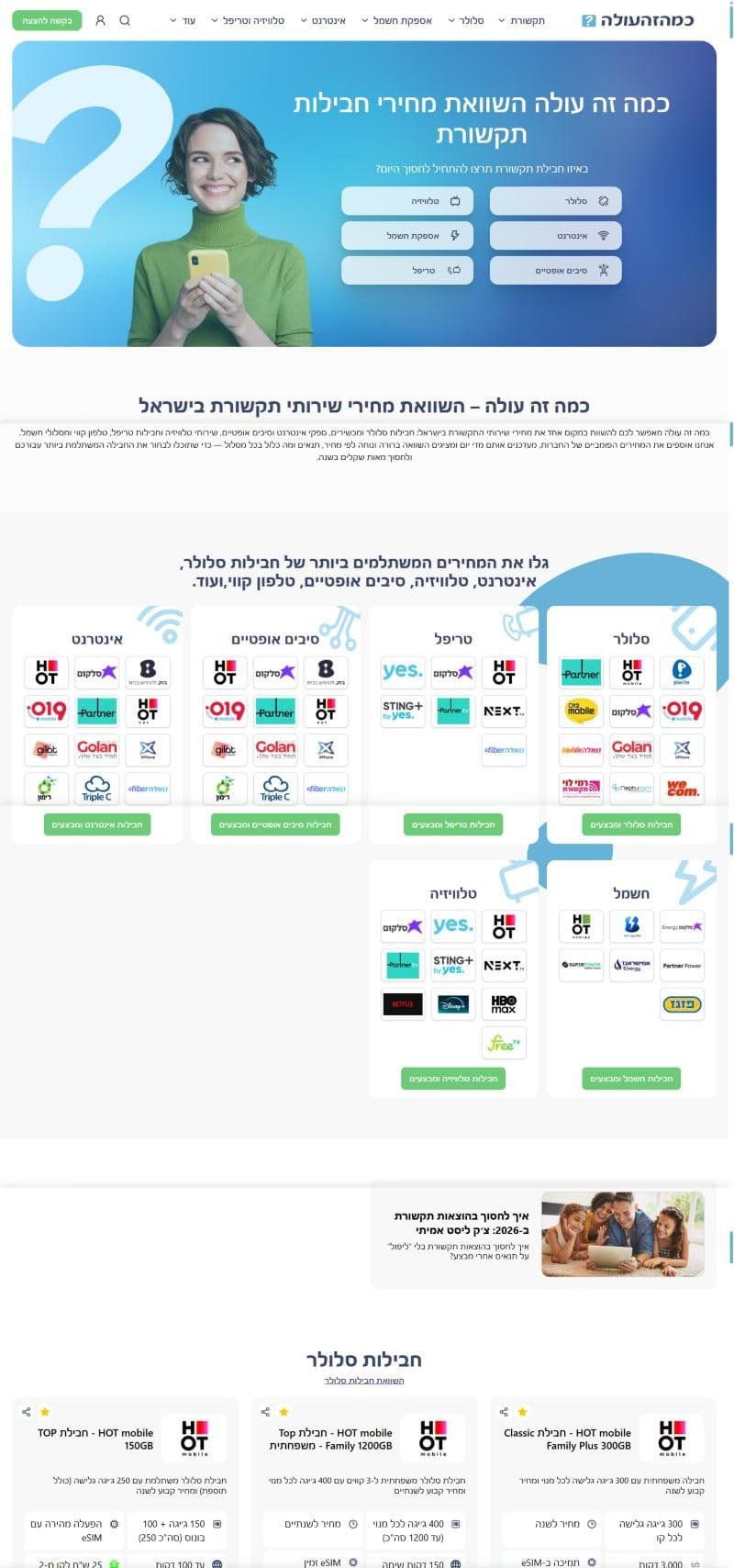

WebsitePlan comparison, Israel
Kamazeole
The public website and CRM of a plan comparison service, from the click on an ad to the invoice sent to the customer.
Nexovia is a software development company in Israel. We take on complete systems, or the part your team cannot cover today: architecture, development, testing, deployment and support.
Companies that need software built properly, with or without an engineering team of their own.
01
When the roadmap is longer than the team, we take a module, a service or a whole project and deliver it inside your architecture, your repository and your review process.
02
When a client project needs more people or a skill you do not have in house, we deliver the part you hand over, with code and documentation your team can maintain.
03
When spreadsheets and off-the-shelf tools no longer fit, we design, build and run the system: CRM, back office, integrations, AI features.
04
When the product has to reach real users, we write down the scope of the first version and deliver it in milestones you can test.
The public website and CRM of a plan comparison service, from the click on an ad to the invoice sent to the customer.
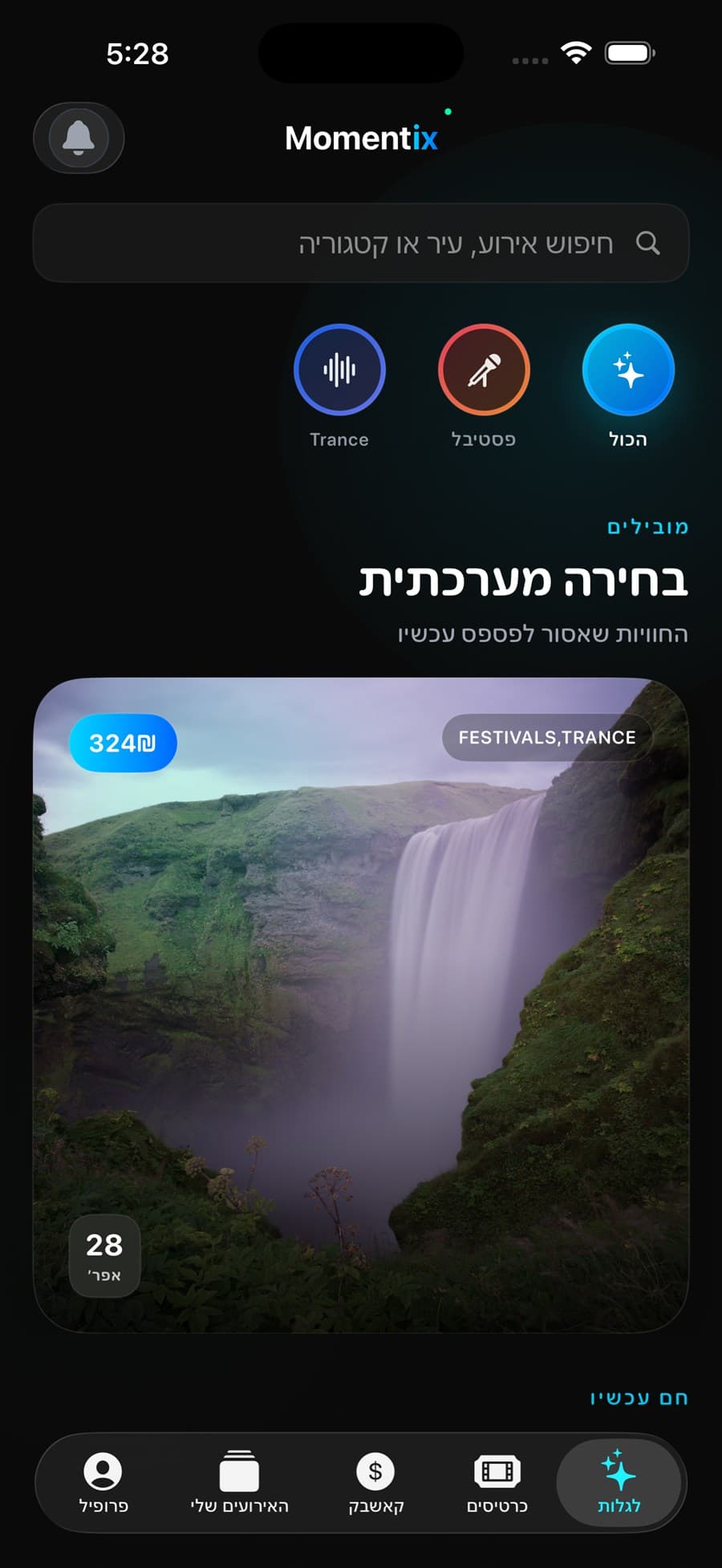

A ticketing service for parties, festivals and concerts, with iOS and Android apps, a website and tools for organizers.


A custom online store for an Israeli clothing brand, with a back office the brand owns, in Hebrew.
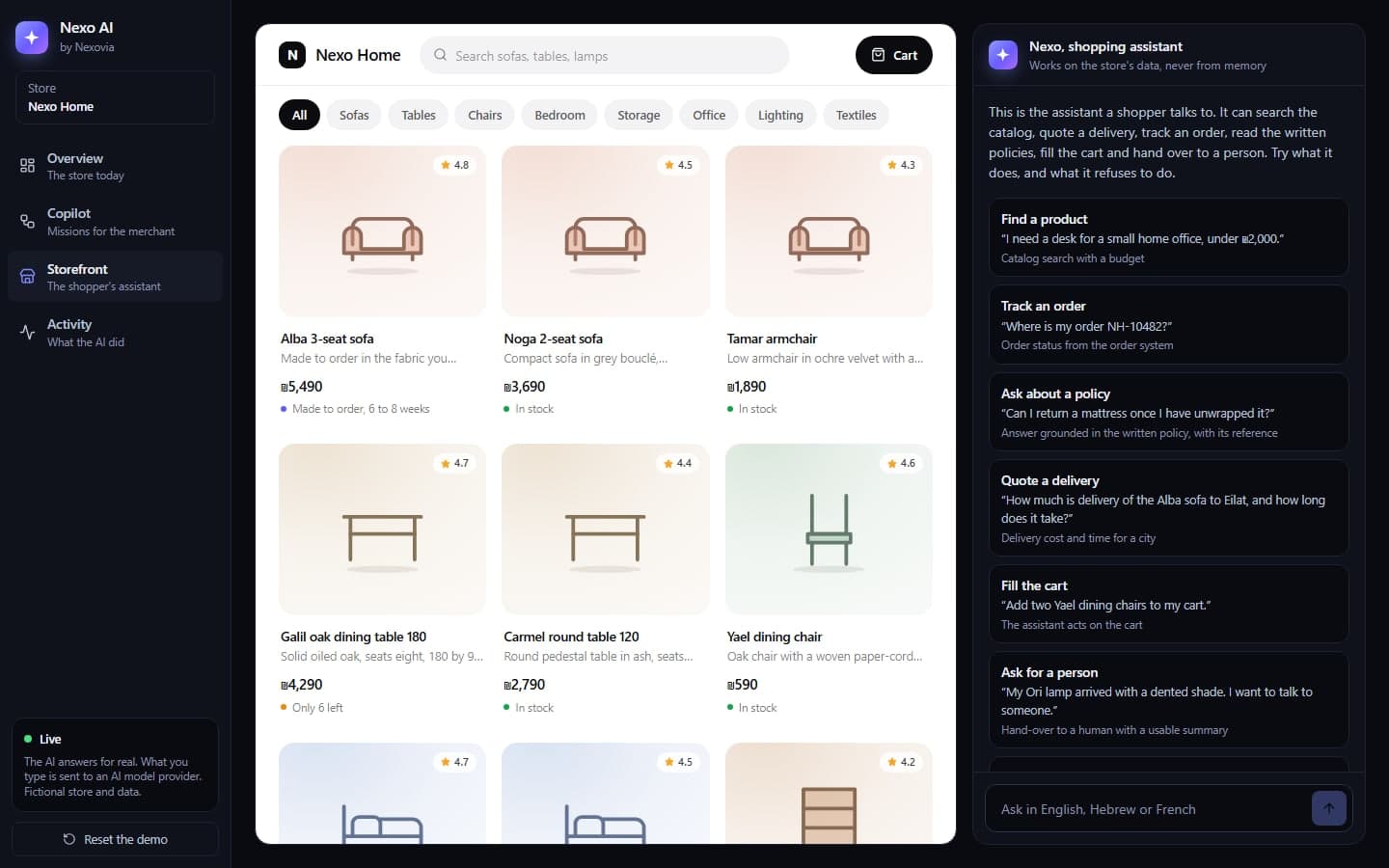
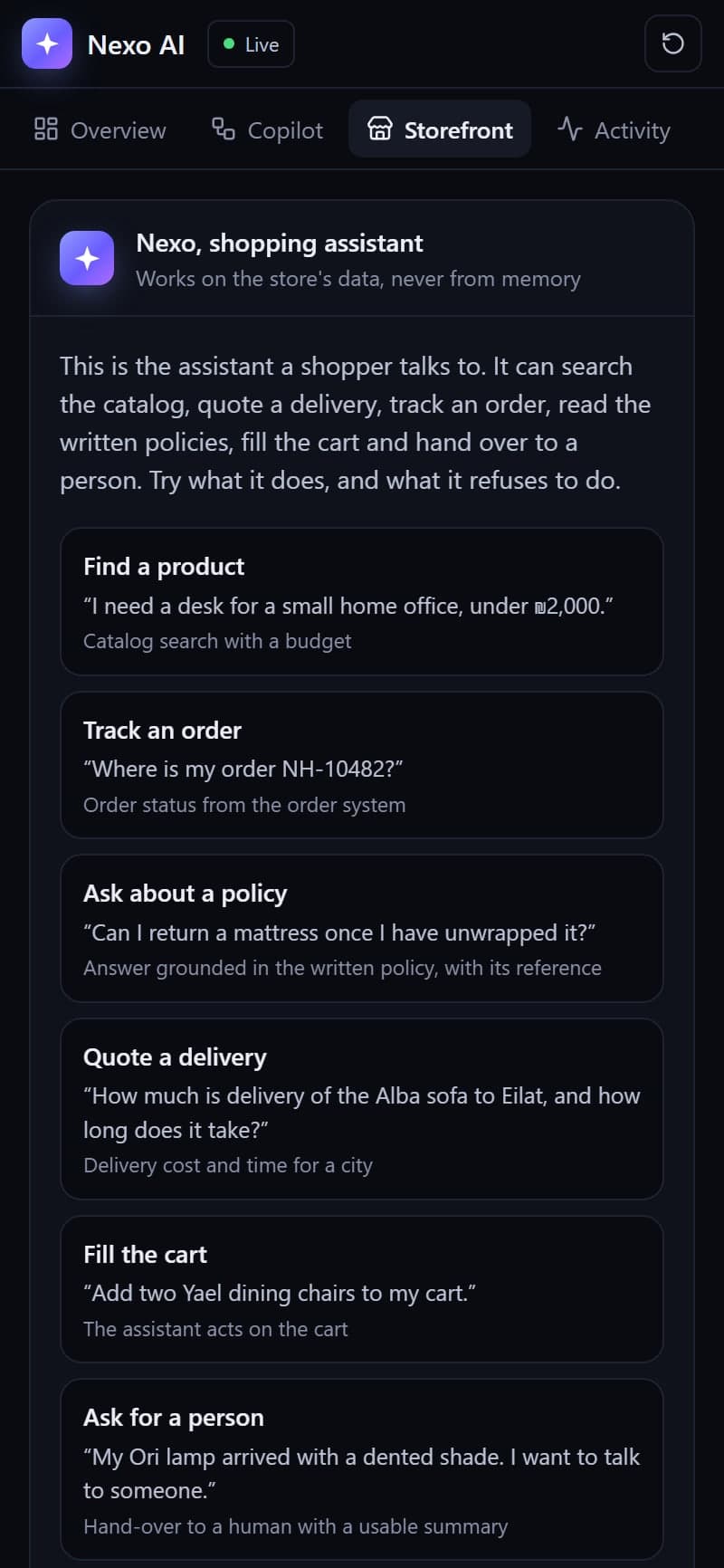
An AI layer for online stores: a copilot where a team of agents works for the merchant, and a shopping assistant that acts through tools for the customer.
The same six stages for a complete project and for a single module. Each one ends with something you can check.
Step 1
We go through what already exists (code, documents, tools) and write down the goal, the scope of the first version, what is left out and the risks we can already see.
Step 2
We choose the architecture for this project, record each decision with its reasons in the repository, and split the work into milestones with a budget for each.
Step 3
Each milestone runs on a test URL. Scope changes are weighed against the written scope before the next milestone starts, not slipped in quietly.
Step 4
Unit, integration and end-to-end tests run in containers on every change. A release goes through a test environment before it reaches production.
Step 5
Deployed to your hosting with the same images that passed testing, verified backups and a way to roll back to the previous version.
Step 6
Documentation and architecture decisions stay in your repository, so your team, or another one, can take over. We can stay on for maintenance if you want.
Decide what to build, for whom and in what order, before a single line of code is written.
Websites, web and mobile apps, APIs and business tools, built to last.
System design sized to your team: modular monoliths, microservices, monorepos and data models that stay easy to change.
Interfaces that stay clear and accessible, designed for real use.
Language models connected to your own data, with guardrails, measured costs and a clear use in daily work.
Online stores, marketplaces and back offices, from the catalog to shipping.
Pipelines, containers, Kubernetes and monitoring: releases become routine and production stays visible.
Testing, maintenance and product management, so the software keeps working after launch.
Architecture, DevOps and testing are part of every project we deliver. They are also available on their own when your team needs senior help.
An architecture that fits your product, your traffic and the team that will maintain it.
Microservices where independent scaling or independent teams justify them, and a modular monolith where they do not.
One repository for web, mobile and backend, with shared packages and builds that only run what changed.
Kubernetes when it pays off, set up on a managed cluster and deployed through GitOps.
Every change is tested, then deployed automatically, with a rollback ready.
Playwright tests for the web and device tests for mobile, on the flows that matter most.
Practices we apply to the systems we build and run. If your organization has its own requirements, such as an NDA, a security questionnaire or access rules, raise them on the first call so they become part of the scope.
The repository, the hosting accounts and the data belong to you from day one. Another team can take over without us.
Keys and passwords live in environment templates and the hosting provider's secret store, never in the repository.
A single public entry point. Internal services are reachable only on the private network, and test environments are separate from production.
The image that runs in production is the one that passed the tests, and every release goes through a test environment first.
Access rights and data isolation are enforced in one place, with a record of every sensitive action.
Backups are part of the deployment, and restores are tested rather than assumed to work.
Pick the situation closest to yours. Each page explains how we would approach it.
A first version that real customers can use, built on a base you will not have to rewrite.
Multi-tenancy, billing, performance and a delivery pipeline for a product that already has customers.
Replace an old system piece by piece while the business keeps running on it.
Language models put to work on real tasks, with evaluation and cost control.
A senior team that takes on your product, or part of it, for the long run.
DevOps
A small team cannot watch fifty dashboards, and it does not need to. Structured logs, a few metrics, traces and error tracking are enough when the alerts follow what users feel.
· 4 min read
DevOps
A healthy pipeline tests every pull request, builds one image and promotes it unchanged, and makes rollback a routine action. This is the checklist we use when we review one.
· 4 min read
DevOps
Kubernetes solves real problems for teams running several services at scale. For one application and a database, Docker Compose or a managed platform does the job with far less to maintain.
· 5 min read
Describe it in three lines. We reply with specific questions and a first take on how to proceed.